Design for Repairability Thesis
MS thesis investigating the effects of the Right-to-Repair Movement in consumer electronics and exploring the use of AI coding to develop analysis tools.
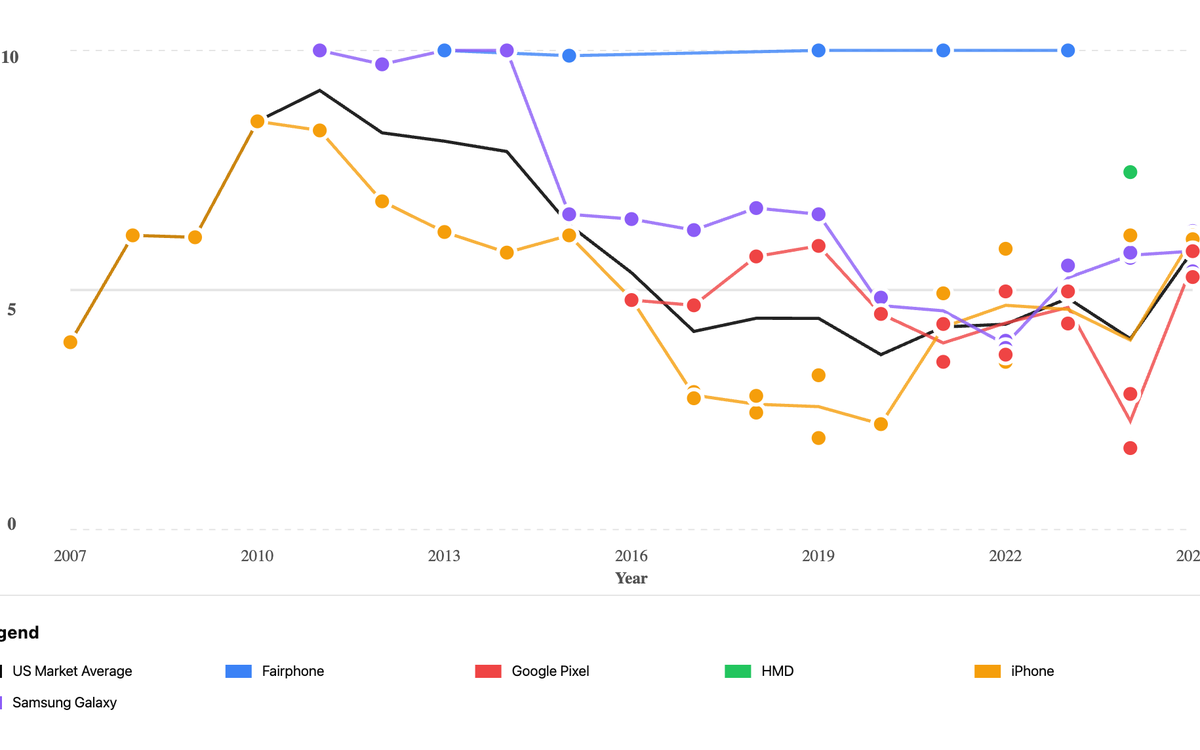
Built a Python analysis and visualization tool, developed with Cursor and Claude Code, that pulls device repair data from the iFixit API and scores it on repair steps, tools required, and fastener types. Applied it across a decade of iPhone, Samsung Galaxy S, and Google Pixel models, benchmarked against the Fairphone.
Found that smartphone repairability declined sharply through the mid-2010s, largely as a consequence of adding water resistance, then recovered after 2020 under regulatory pressure and the Right-to-Repair movement. The resulting fastener and tool-selection insights give designers a historical basis for building more repairable devices.